
Could you tell us about the beginnings of the South Lebanon Occupation and Liberation Museum (SOL Museum)? What initially motivated you to collect and preserve the memory of the South?
I come from South Lebanon, and I have lived there all my life. My village was right on the line between the occupied area in South Lebanon and the liberated lands. I lived through all the occupations as a child, from the Qana massacre and the 1993 war and the 1996 war, and finally the liberation in 2000. So, by default, all these memories led me to choose filmmaking, and later on, they created a curiosity in me to know more about my history and to document all the stories that I lived and that my people in the South lived.
As I grew, I felt more responsibility to document more and to save the stories and the histories that will help us create our own narrative, far from what the occupation was and is trying to spread.
As this responsibility grew, things started going to the next level, and the archive became bigger. And this is why I decided that all of these materials and archives had to be in a place or space. And this is what brought the SOL Museum to life.
In your interview with Dana Hourany for Public Source (edited by Christina Cavalcanti and Tracy J. Jawad), you spoke about your desire not simply to preserve archival materials, but to bring them back to life. What does it mean, in practice, to bring an archive to life rather than simply preserve it?
For me, the challenge is not in collecting these materials, putting them in boxes, and storing them. For me, our duty is to bring them back to life. Giving this document or archival item a story. Connecting it with someone’s memory or story. This is what I try to do. Either by transforming these materials into reels and publishing them on social media, or by recording oral stories with people who can relate to these items and sharing them. Such as in the exhibitions that I did before:
I believe this process helps us engage with younger generations. It also presents the archive as something that carries feelings, rather than just papers and physical items.
In Stories from the South, each story begins with an archival object. What led you to adopt this approach, and what can archival materials reveal that traditional historical narratives may overlook?
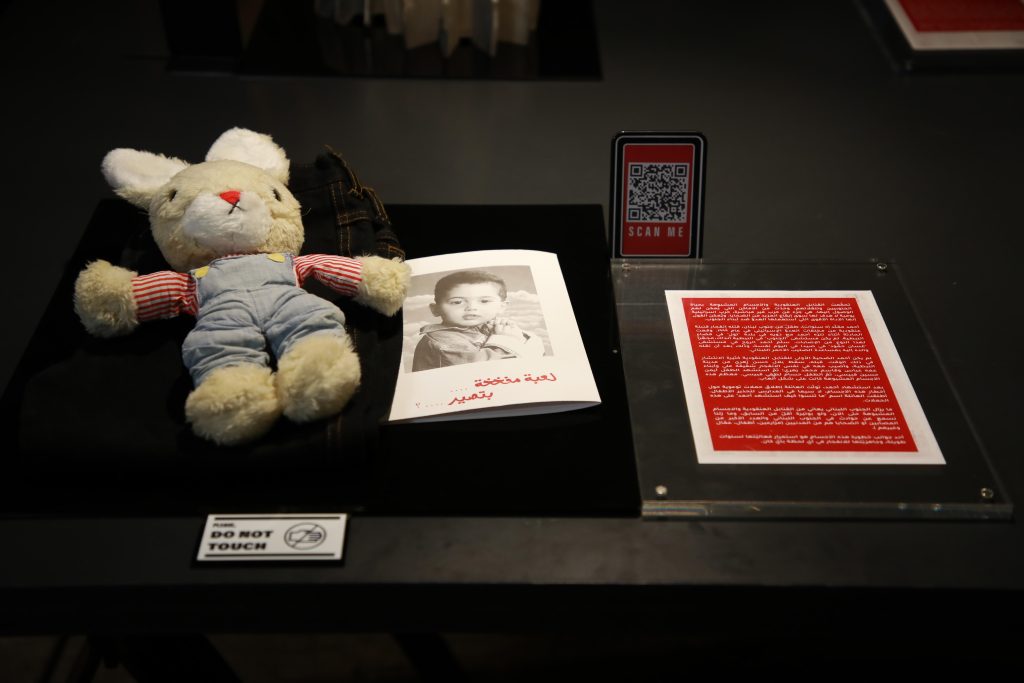
Again, the idea was to select items from the archive that have some kind of meaning or relation to me. For example, an item related to Ahmad Mokaled,[1] the child who was killed at the age of 6 by a cluster bomb in 1999, means a lot to me because I went to the same school as Ahmad. Then, the second step is to find the right person to interview, knowing that this item is either directly related to the person or will trigger something in this person’s memory. And finally, recording, which is a hard process by itself: bringing back memories from 30 or 40 years ago, dissecting them, and preserving them.
Your exhibition Hkeeli Ya Janoub (Tell Me, South) at Beit Beirut creates a space in which people, memories, family archives, and traces of everyday life become storytellers. Was this a conscious artistic choice? And what does it mean, politically and ethically, to create an archive that engages with the South, rather than speaks about it?
Hkeeli Ya Jnoub was a normal reaction to the destruction and killing in South Lebanon. It is a reaction to the erasure of villages, memories, and archives. We first tried to talk about South Lebanon and share the stories of people from the South. We gave space to archivists and artists to share their work, and created a space for people, both from the South and from all around Lebanon, to interact with these stories.
It is not an art museum or a classic history museum; it is a museum of feelings and stories. Stories of the people, for the people. This is what gave people the chance to listen, talk, write, and express themselves.
In After Supper, you foreground the voices of women whose experiences of occupation, displacement, and the loss of home are often marginalised in dominant narratives of war. Why was it important for you to place these testimonies at the heart of the work?
After Supper was also a reaction to displacement. It was a reaction to the suffering of people, and especially women, during displacement, but also to the strength of these women and the hope and love they have for their land and homes.
It was a difficult process to record these women while the war was happening. The women were recording their stories while being displaced, while their villages were being erased. And this was a challenge for me personally because I shared the same fate as these women, and for them to be able to express themselves with all this weight on their shoulders.
But again, in times of war, and with an occupation that is trying to erase your history and memories, this becomes a form of resistance. And documentation becomes a larger responsibility.
Much of your work engages with what archiving means in the context of occupation and repeated displacement. How does working under these conditions shape our understanding of what an archive is and the role it is meant to play?
When working with archives about the Zionist occupation, you can never work without understanding how this occupation dealt with the Palestinian narrative and archives. And understanding that we, and people from countries that were colonized and then occupied, have a duty to regain our archives and narrative.
This is why I treat it like a personal responsibility, as if saving these archives and stories is the last form of resistance I can personally undertake.
We, the people of South Lebanon, are not fans of war. It was forced on us, and if I could be archiving Southern food instead of war, I would be happy. But we have an enemy that never stops trying to erase us, and this is why this form of documentation becomes a priority.
In your interview with Dana Hourany for Public Source (edited by Christina Cavalcanti and Tracy J. Jawad), you said that keeping archives in the village is an act of steadfastness, while rescuing them is an act of resistance. Could you tell us more about this? What forms of resistance does archival work make possible?
This occupation erased villages and destroyed historical buildings, castles, mosques, and churches. It burned libraries and public libraries, in an attempt to destroy anything that could form a narrative.
And yes, the normal place for these archives is South Lebanon, in their own land, between their own people and owners. This is a form of resilience.
But saving them in any way possible, whether by moving the archives temporarily, digitizing them, sharing them, or recording them, is exactly how you resist this cultural destruction. It is how you save what is left.
Resistance with archives is the basis for creating a narrative. It is what marginalized groups and oppressed people use as a weapon.
As you mention in your interview with Public Source, Nidaa al-Muqawama (The Call of Resistance) was an underground publication issued by the Lebanese Communist Party during the Israeli occupation. It was written, printed, and distributed in small numbers to fighters in Tyre and the South. What can magazines and publications like this reveal to us, not only about political organizations, but also about the everyday practices of resistance, methods of communication, and strategies of survival?
The Call of Resistance (Nidaa al-Muqawama) was a magazine that was produced under the occupation. The process of making it and distributing it tells the story of resistance in a city at war. It shows how, with minimal resources, they made an underground magazine for resistance members, how they kept it secret, what they wrote in it, and how it shaped the idea that a resistance fighter needs to be educated in addition to being a freedom fighter.
Your exhibitions include letters exchanged between detainees at Khiam Prison and their family members. Could you tell us more about these letters?
In the archive, we have multiple items related to both Ansar Prison and Khiam Prison.
The importance of these documents is that, in the last few months, the occupation forces erased and destroyed Khiam Prison, which was a monument related to the crimes committed in South Lebanon. Khiam Prison was a place where the people of South Lebanon suffered a lot.
Having documents that prove this and keep these stories alive after the erasure of the building gives us more responsibility and a strong push to keep doing what we are doing.
The SOL Museum project is still in its early stages. How do you envision the future of the project? What stories, communities, or forms of memory do you hope the project will give greater space to in the coming years?
Hopefully, SOL will be an online museum soon. And in the future, ideally, it should be a physical museum in South Lebanon. I see it as a space for people to document their histories, not only the occupation. We look at it as a resource centre for students, researchers, and journalists, and at the same time as a museum of emotions. It reflects all the emotions that you can have as a person from South Lebanon. And at the same time, it is a museum of strength and civil resistance.
[1] Ahmad Raed Mokaled, a six-year-old boy from South Lebanon, was killed in 1999 by a “booby-trapped toy” (لعبة مفخخة). These were toys and other objects rigged with explosives, which the Israeli occupation forces left in villages across South Lebanon, posing a particular danger to children.
“Resistance Is the Road of the South” (المقاومة طريق الجنوب), a publication by Mohsen Ibrahim and the Communist Action Organization in Lebanon. (Photo courtesy of Adeeb Farhat.)

Adeeb Farhat at the flea market. Photo by Wissam Andraous.

A child’s rabbit toy displayed at the Stories from the South exhibition in Beirut, as a reminder of children whose lives were lost to explosive devices hidden in toys and everyday objects during the Israeli occupation. September 16, 2024. (Photo courtesy of Adeeb Farhat.)
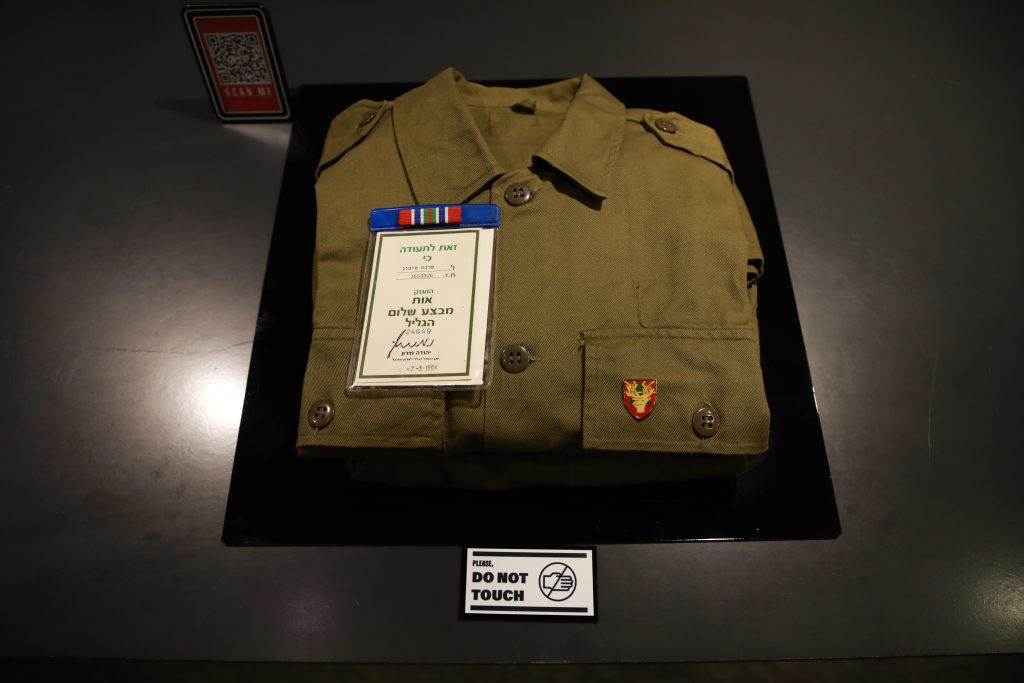
An Israeli military uniform and service certificate dated July 8, 1983, from the first years of the Israeli occupation of South Lebanon, displayed at the Stories from the South exhibition in Beirut, Lebanon. September 16, 2024. (Photo courtesy of Adeeb Farhat.)
Cover of Al-Hawadeth magazine, 16 January 1970. From the archive of the South Lebanon Occupation and Liberation Museum.


